
Long-term stress doesn’t always look like panic.
Sometimes it looks like competence.
Like shutting off the extra feelings,
narrowing life down to what’s necessary,
doing the next right thing
because someone has to.
You learn how to function in crisis.
How to calculate, absorb, carry.
How to keep moving while your inner world goes quiet—
not dead, just muted—
while the weight stays heavy in the chest and hands.
The danger isn’t the fight.
It’s the slow temptation to shut down completely.
To mistake numbness for strength.
To confuse survival with living.
By the end of the day,
the tank is almost empty.
Numbers don’t add up.
Warning lights blink.
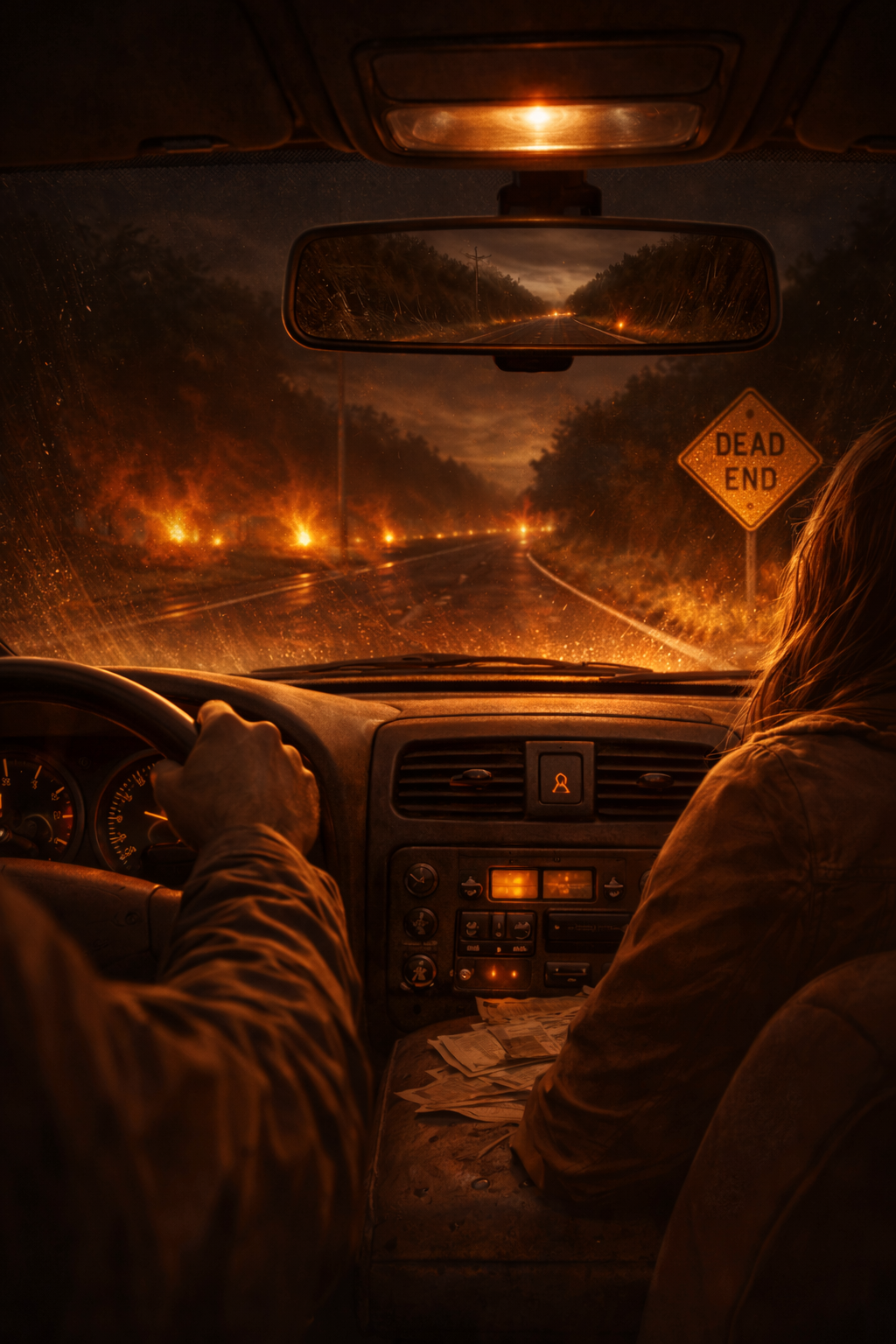
Dead-end signs appear more often than exits.
The flames feel closer now—
close enough to warm,
close enough to burn.
And still…
we keep driving.
Hope becomes stubborn at this stage.
Not loud or confident—
just persistent.
A refusal to accept the word terminal
even when it’s posted in bold letters.
Are we crazy for this?
Or just human—
wired to live on the edge
because stopping feels more dangerous
than continuing forward?
Maybe hope isn’t optimism at all.
Maybe it’s simply choosing not to turn the engine off
yet.