Introduction to My First Book Chapter
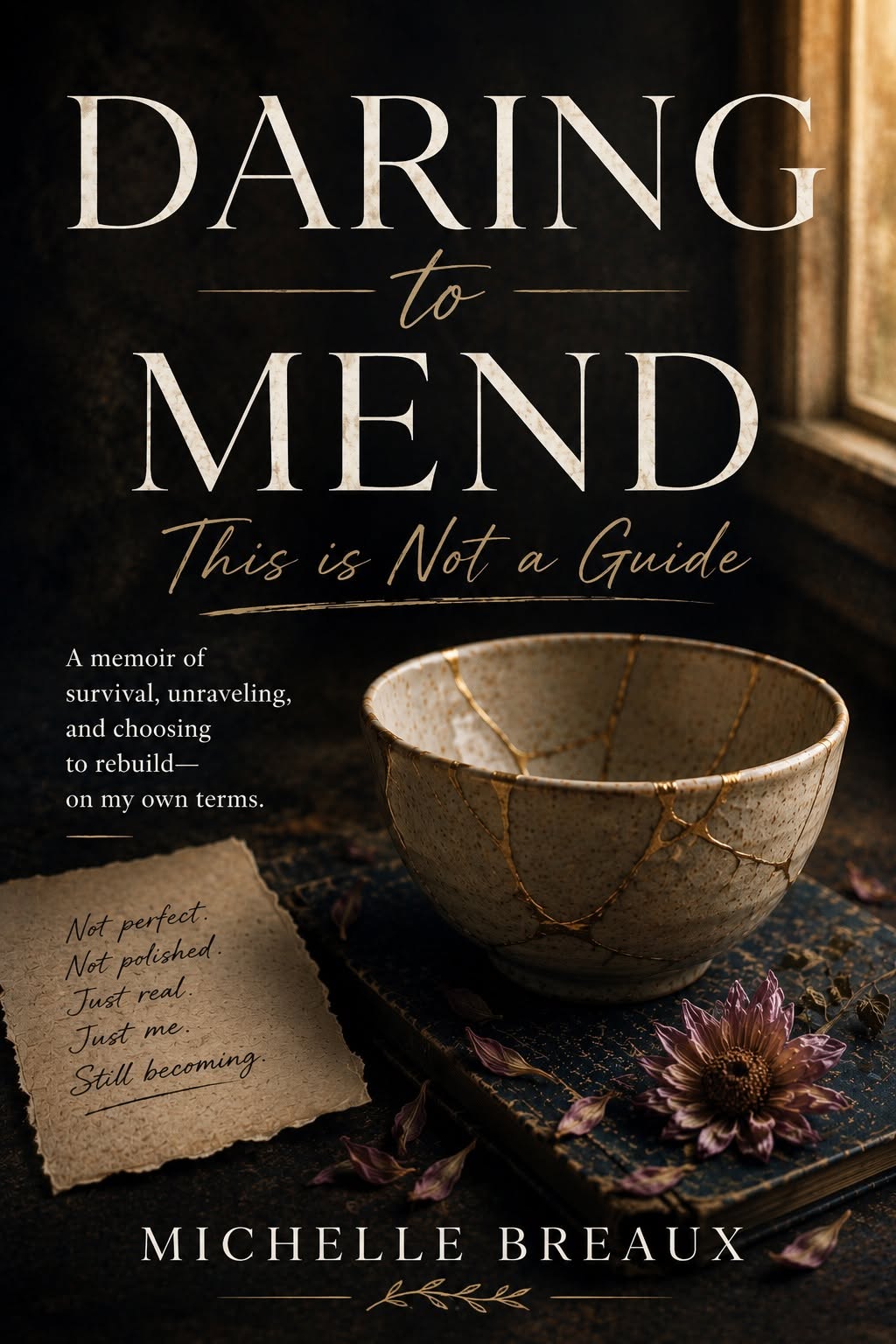
This is not guidance.
It’s not a program, and it’s not a plan to fix anything.
I’m not writing from the other side of something, tying it up neatly so it makes sense for you. I’m not a counselor here, or a coach, or someone with a framework.
I’ve been those things in parts of my life.
This isn’t that.
This is more like sitting across from someone with coffee or tea, saying things out loud that don’t always get said, and not rushing to make them sound better than they are.
I have a professional background. I’ve helped people. I’ve sat across from others in hard moments and knew what to say.
And still—
There are entire seasons of my life I look back on and feel embarrassed.
Not confused.
Not curious.
Embarrassed.
That’s part of what this is.
Not a confession.
Not an apology tour.
Just the truth, as I can tell it now, without trying to clean it up.
There’s more to the story than what’s here.
There will always be more.
But this is where I’m starting.
CHAPTER 1: I LOOKED FINE ON PAPER
If you were to read my résumé without knowing me, you would probably think I was stable.
Maybe even impressive in a quiet way.
Honor societies.
Scholarships.
Leadership roles.
Degrees.
Certifications passed on the first try.
Years in counseling, rehabilitation, addiction work, disaster case management.
Helpful.
Dependable.
Someone who could sit across from a person in crisis and not flinch.
That part is true.
What isn’t on paper is how early I learned to become that person.
Or why.
I was the kind of kid who did well.
The kind adults could point to and say, “She’s going to be something.”
I was involved.
Structured.
Capable.
Useful.
That word matters more than I realized at the time.
Useful.
There’s a certain kind of praise that comes with being useful as a young girl.
It sounds like encouragement, but it feels like expectation.
You learn quickly that being:
-
- helpful
-
- smart
-
- well-behaved
-
- emotionally manageable
keeps things steady.
Keeps adults comfortable.
Keeps you safe, in a way.
And you don’t question it.
You build around it.
By the time I was eight, things had already happened that I didn’t have language for yet.
I didn’t sit down and process them.
There was no moment where someone explained it in a way that landed.
Life just… kept moving.
School.
Expectations.
Normal routines.
At the same age, I lost my front permanent tooth in a waterslide accident.
Which sounds small.
But it’s strange how that one accident led to the entire family beginning dental and orthodontic appointment and care.
Your face changing.
People noticing.
Feeling different in a way you can’t fully explain.
Then came years of headgear, braces, trying to be okay with those differences and appreciate what was being done for me.
There’s a quiet awareness that builds in those years.
Of your body.
Of how you’re seen.
Of how you don’t quite match what feels easy for other people.
Nothing dramatic.
Just enough.
Just enough to add to existing awkwardness with a mix of appreciation.
At eleven, my parents divorced.
At the same time, I was recognized as a top academic achiever.
Those two things existed side by side.
That’s something I didn’t question then either.
You learn how to carry two realities at once:
-
- things falling apart
-
- and being rewarded for holding it together
No one pulls you aside and says,
“Hey, this might be a lot.”
They just hand you the certificate.
At twelve, I got my first period at my grandfather’s funeral.
Even writing that now, I can feel how strange it was.
Grief in one direction.
Your body changing in another.
No pause between the two.
No real transition.
Just:
life, continuing to happen to you faster than you can organize it.
By thirteen, I had a friend who wasn’t okay.
I don’t think any of us knew what to do with that.
She talked about things that didn’t feel normal.
There were signs.
But when you’re that age, you don’t have a framework for danger that looks like that.
You just know something feels off.
And then one day it crossed a line none of us were prepared for.
She didn’t hurt her parents like she had talked about.
She killed her cat.
Brought parts of it to school.
Got expelled.
And later—
she found religion.
Got “born again.”
Gave me my first Bible.
Invited me to youth group.
That’s how faith entered my life.
Not through peace.
Through chaos trying to find meaning.
By fifteen, things at home had gotten difficult enough that I moved in with my dad.
That changed everything again.
Different house.
Different energy.
Different expectations.
By sixteen, I lost my virginity to a boy who would later leave me for my step-sister.
There are certain types of humiliation that don’t need a lot of explanation.
That’s one of them.
Especially when it happens inside a family dynamic that already feels uneven.
I had a step-sister who talked down to me.
Another who I had been close to, until I wasn’t.
And suddenly I was the one outside of something I thought I belonged to.
That kind of shift stays with you.
That was also around the time I smoked my first joint.
Not out of rebellion.
Not out of curiosity.
Out of something closer to:
I don’t want to feel this right now.
I didn’t think of it that way at the time.
But looking back, it’s clear.
It wasn’t about the substance.
It was about relief.
None of this looked dramatic from the outside.
There were no headlines.
No interventions.
No one stepping in saying,
“Something is off here.”
I was still:
-
- functioning
-
- performing
-
- achieving
-
- showing up
And that’s the part that confuses people later.
Because when everything finally catches up to you,
they think it came out of nowhere.
It didn’t.
It built slowly.
Quietly.
In small moments that didn’t seem important enough to stop everything.
Until one day—
they were.
See my next post…for Chapter 2, they will be ALL (my first book) be published here for FREE. If you wish to contribute something at the end of reading everything, just contact me directly, and I will use the money towards future professional publications.